Buy housesparrow.eu ?
We are moving the project
housesparrow.eu .
Are you interested in purchasing the domain
housesparrow.eu ?
domain@kv-gmbh.de · 0541-91531010
Buy housesparrow.eu ?
How do you calculate the braking distance, the braking process, and the braking deceleration?
The braking distance can be calculated using the formula: braking distance = (initial velocity^2) / (2 * deceleration), where the deceleration is the rate at which the vehicle slows down. The braking process involves the driver applying the brakes, which causes friction between the brake pads and the wheels, leading to a decrease in the vehicle's speed. The braking deceleration can be calculated by dividing the change in velocity by the time it takes for the vehicle to come to a complete stop. **
How do you calculate the braking time and braking distance?
Braking time and braking distance can be calculated using the formula: Braking distance = (initial velocity^2) / (2 * deceleration) Where initial velocity is the speed of the vehicle before braking, and deceleration is the rate at which the vehicle slows down. Braking time can be calculated by dividing the braking distance by the initial velocity. These calculations are based on the assumption of constant deceleration, and may vary depending on factors such as road conditions and the vehicle's braking system. **


Similar search terms for Braking
Top-Angebote
Products related to Braking:
-
Inspire Select Interactive Singing Plush Elephant Toy With Moving Ears Interactive Singing Plush Elephant Toy With Moving EarsBring endless fun and surprises to playtime with this singing plush elephant that captivates with moving ears and cheerful sounds. Designed for toddlers, kids and anyone who loves interactive plush toys, this animated elephant toy stands out with...46,48 $*Shipping: 0,00 $Secure redirect to the provider
-
Hi-Line Gift Motion Activated Singing EagleEnjoy the relaxing sounds of a singing eagle. This uniquely-crafted and beautiful motion-sensor statue will please any bird lovers. Made of polyresin, this can be used indoors and outdoors. Uses Alkaline LR44 coin cell battery, 3pcs.64,73 $*Shipping: 0,00 $Secure redirect to the provider
-
Brainstream Pirate BeepEgg Singing and Floating Egg TimerBrainStream Pirate BeepEgg - Musical Kitchen Timer & Egg Timer, Plays 3 Tunes for Soft, Medium, Hard-Boiled Eggs - Any Egg Size & Temperature, Ideal for at Home or Camping - Made in Germany - New Turn breakfast into a fun and effortless experience...29,99 $*Shipping: 0,00 $Secure redirect to the provider
-
Global Craft Wisdom Buddha Singing Bowl Leather StrikerThis exclusive singing bowl design is made of a special seven metal alloy, with each metal representing a part of the astrological universe. It measures 6 inches by 2 inches and includes 6 inch wooden baton.97,49 $*Shipping: 0,00 $Secure redirect to the provider



-
What are the differences between braking to walking speed and braking?
Braking to walking speed typically involves gradually reducing speed until coming to a complete stop, whereas braking refers to the act of slowing down a moving vehicle. When braking to walking speed, the goal is to smoothly decelerate without any sudden stops, while braking may involve more forceful actions to slow down quickly. Additionally, braking to walking speed is often used in situations where a vehicle needs to stop at a precise location, such as at a crosswalk or intersection. **
-
How do you calculate braking time and braking distance in physics?
In physics, braking time and braking distance can be calculated using the equations of motion and the principles of kinematics. The braking time can be calculated using the equation t = v/u, where t is the braking time, v is the final velocity, and u is the initial velocity. The braking distance can be calculated using the equation d = (v^2 - u^2) / (2a), where d is the braking distance and a is the deceleration. These equations take into account the initial and final velocities, as well as the deceleration of the object to determine the braking time and distance. **
-
Is braking a reflex?
Braking can be considered a reflex in certain situations. When a driver reacts to a sudden obstacle or hazard on the road by immediately pressing the brake pedal, it can be seen as a reflexive action. This is because the response is automatic and occurs without conscious thought. However, braking can also be a learned behavior, as drivers are trained to use their brakes in specific situations through practice and experience. Therefore, while braking can be a reflex in some cases, it can also be a learned and intentional action. **
-
What is the formula for braking acceleration and braking time in physics?
The formula for braking acceleration is given by \( a = \frac{v_f - v_i}{t} \), where \( a \) is the braking acceleration, \( v_f \) is the final velocity, \( v_i \) is the initial velocity, and \( t \) is the time taken to come to a stop. The formula for braking time can be calculated using the equation \( t = \frac{v_f - v_i}{a} \), where \( t \) is the braking time. These formulas are used to calculate the rate at which an object slows down when braking. **


What is the difference between a full braking and an emergency braking?
Full braking refers to applying the brakes with maximum force in a controlled manner to slow down or stop the vehicle. This can be done in response to normal traffic conditions or when approaching a stop sign or traffic light. On the other hand, emergency braking is a sudden and forceful application of the brakes in response to an unexpected hazard or danger, such as a pedestrian stepping into the road or a vehicle suddenly stopping in front. Emergency braking is typically done to avoid a collision and requires quick reflexes and a strong, immediate response from the driver. **
What is the difference between braking with a clutch and braking without?
Braking with a clutch involves pressing the clutch pedal while simultaneously applying the brakes, which disengages the engine from the transmission and allows the vehicle to coast to a stop. This method is often used in manual transmission vehicles to prevent stalling. On the other hand, braking without using the clutch means simply applying the brakes without disengaging the engine from the transmission, which can cause the vehicle to stall if the engine speed drops too low. In summary, the main difference is that braking with a clutch allows the vehicle to coast to a stop without stalling, while braking without the clutch can potentially lead to stalling if not done properly. **
Top-Angebote
Products related to Braking:
-
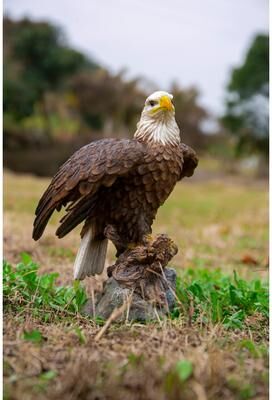
San Pacific - Ds Perching Eagle Garden Sculpture Dark Bronze , Dark BronzeBe sure to be quick if you want to see the Perching Eagle. This hand-cast aluminum sculpture has a hand-rubbed, dark bronze finish and depicts an eagle on a tree stump ready to take flight. This sculpture may be used indoors or outdoors year round....384,99 $*Shipping: 0,00 $Secure redirect to the provider
-
Uplift Essentials Humane Bird Deterrent Perch Strips Stainless Steel Anti Perching Barrier For Balcony Fence And Eaves Humane Bird Deterrent Perch Strips Stainless Steel Anti Perching Barrier For Balcony Fence And EavesStop birds from landing and leaving messy droppings without harming them. These durable stainless steel perch deterrent strips create an uncomfortable landing surface that helps keep balconies, fences, and window ledges clean and protected. Designed...39,97 $*Shipping: 0,00 $Secure redirect to the provider
-
Inspire Select Interactive Singing Plush Elephant Toy With Moving Ears Interactive Singing Plush Elephant Toy With Moving EarsBring endless fun and surprises to playtime with this singing plush elephant that captivates with moving ears and cheerful sounds. Designed for toddlers, kids and anyone who loves interactive plush toys, this animated elephant toy stands out with...46,48 $*Shipping: 0,00 $Secure redirect to the provider
-
Hi-Line Gift Motion Activated Singing EagleEnjoy the relaxing sounds of a singing eagle. This uniquely-crafted and beautiful motion-sensor statue will please any bird lovers. Made of polyresin, this can be used indoors and outdoors. Uses Alkaline LR44 coin cell battery, 3pcs.64,73 $*Shipping: 0,00 $Secure redirect to the provider
-
How do you calculate the braking distance, the braking process, and the braking deceleration?
The braking distance can be calculated using the formula: braking distance = (initial velocity^2) / (2 * deceleration), where the deceleration is the rate at which the vehicle slows down. The braking process involves the driver applying the brakes, which causes friction between the brake pads and the wheels, leading to a decrease in the vehicle's speed. The braking deceleration can be calculated by dividing the change in velocity by the time it takes for the vehicle to come to a complete stop. **
-
How do you calculate the braking time and braking distance?
Braking time and braking distance can be calculated using the formula: Braking distance = (initial velocity^2) / (2 * deceleration) Where initial velocity is the speed of the vehicle before braking, and deceleration is the rate at which the vehicle slows down. Braking time can be calculated by dividing the braking distance by the initial velocity. These calculations are based on the assumption of constant deceleration, and may vary depending on factors such as road conditions and the vehicle's braking system. **
-
What are the differences between braking to walking speed and braking?
Braking to walking speed typically involves gradually reducing speed until coming to a complete stop, whereas braking refers to the act of slowing down a moving vehicle. When braking to walking speed, the goal is to smoothly decelerate without any sudden stops, while braking may involve more forceful actions to slow down quickly. Additionally, braking to walking speed is often used in situations where a vehicle needs to stop at a precise location, such as at a crosswalk or intersection. **
-
How do you calculate braking time and braking distance in physics?
In physics, braking time and braking distance can be calculated using the equations of motion and the principles of kinematics. The braking time can be calculated using the equation t = v/u, where t is the braking time, v is the final velocity, and u is the initial velocity. The braking distance can be calculated using the equation d = (v^2 - u^2) / (2a), where d is the braking distance and a is the deceleration. These equations take into account the initial and final velocities, as well as the deceleration of the object to determine the braking time and distance. **
Similar search terms for Braking
-
Brainstream Pirate BeepEgg Singing and Floating Egg TimerBrainStream Pirate BeepEgg - Musical Kitchen Timer & Egg Timer, Plays 3 Tunes for Soft, Medium, Hard-Boiled Eggs - Any Egg Size & Temperature, Ideal for at Home or Camping - Made in Germany - New Turn breakfast into a fun and effortless experience...29,99 $*Shipping: 0,00 $Secure redirect to the provider
-
Global Craft Wisdom Buddha Singing Bowl Leather StrikerThis exclusive singing bowl design is made of a special seven metal alloy, with each metal representing a part of the astrological universe. It measures 6 inches by 2 inches and includes 6 inch wooden baton.97,49 $*Shipping: 0,00 $Secure redirect to the provider
-
JoyToys Interactive Dancing Bee Toy With Music, Lights & Singing For Kids Interactive Dancing Bee Toy With Music, Lights & Singing For KidsA smile is just one button away with this Dancing Bee Toy that keeps little ones laughing, moving, and learning through play. Designed for toddlers and young children, this adorable bee sings, dances, and lights up to capture attention while...49,97 $*Shipping: 0,00 $Secure redirect to the provider
-
BrainStream Al Dente Pasta Timer Floating Singing Kitchen GadgetBrainStream Al Dente Singing Pasta Timer - Floating Kitchen Timer - Plays Fun Italian Melodies to Cook Pasta - No More Overcooked or Undercooked Noodles - Floats in Cold & Hot Boiling Water - New Cooking al dente pasta has never been this fun!29,99 $*Shipping: 0,00 $Secure redirect to the provider
-
Is braking a reflex?
Braking can be considered a reflex in certain situations. When a driver reacts to a sudden obstacle or hazard on the road by immediately pressing the brake pedal, it can be seen as a reflexive action. This is because the response is automatic and occurs without conscious thought. However, braking can also be a learned behavior, as drivers are trained to use their brakes in specific situations through practice and experience. Therefore, while braking can be a reflex in some cases, it can also be a learned and intentional action. **
-
What is the formula for braking acceleration and braking time in physics?
The formula for braking acceleration is given by \( a = \frac{v_f - v_i}{t} \), where \( a \) is the braking acceleration, \( v_f \) is the final velocity, \( v_i \) is the initial velocity, and \( t \) is the time taken to come to a stop. The formula for braking time can be calculated using the equation \( t = \frac{v_f - v_i}{a} \), where \( t \) is the braking time. These formulas are used to calculate the rate at which an object slows down when braking. **
-
What is the difference between a full braking and an emergency braking?
Full braking refers to applying the brakes with maximum force in a controlled manner to slow down or stop the vehicle. This can be done in response to normal traffic conditions or when approaching a stop sign or traffic light. On the other hand, emergency braking is a sudden and forceful application of the brakes in response to an unexpected hazard or danger, such as a pedestrian stepping into the road or a vehicle suddenly stopping in front. Emergency braking is typically done to avoid a collision and requires quick reflexes and a strong, immediate response from the driver. **
-
What is the difference between braking with a clutch and braking without?
Braking with a clutch involves pressing the clutch pedal while simultaneously applying the brakes, which disengages the engine from the transmission and allows the vehicle to coast to a stop. This method is often used in manual transmission vehicles to prevent stalling. On the other hand, braking without using the clutch means simply applying the brakes without disengaging the engine from the transmission, which can cause the vehicle to stall if the engine speed drops too low. In summary, the main difference is that braking with a clutch allows the vehicle to coast to a stop without stalling, while braking without the clutch can potentially lead to stalling if not done properly. **
* All prices are inclusive of VAT and, if applicable, plus shipping costs. The offer information is based on the details provided by the respective shop and is updated through automated processes. Real-time updates do not occur, so deviations can occur in individual cases. ** Note: Parts of this content were created by AI.